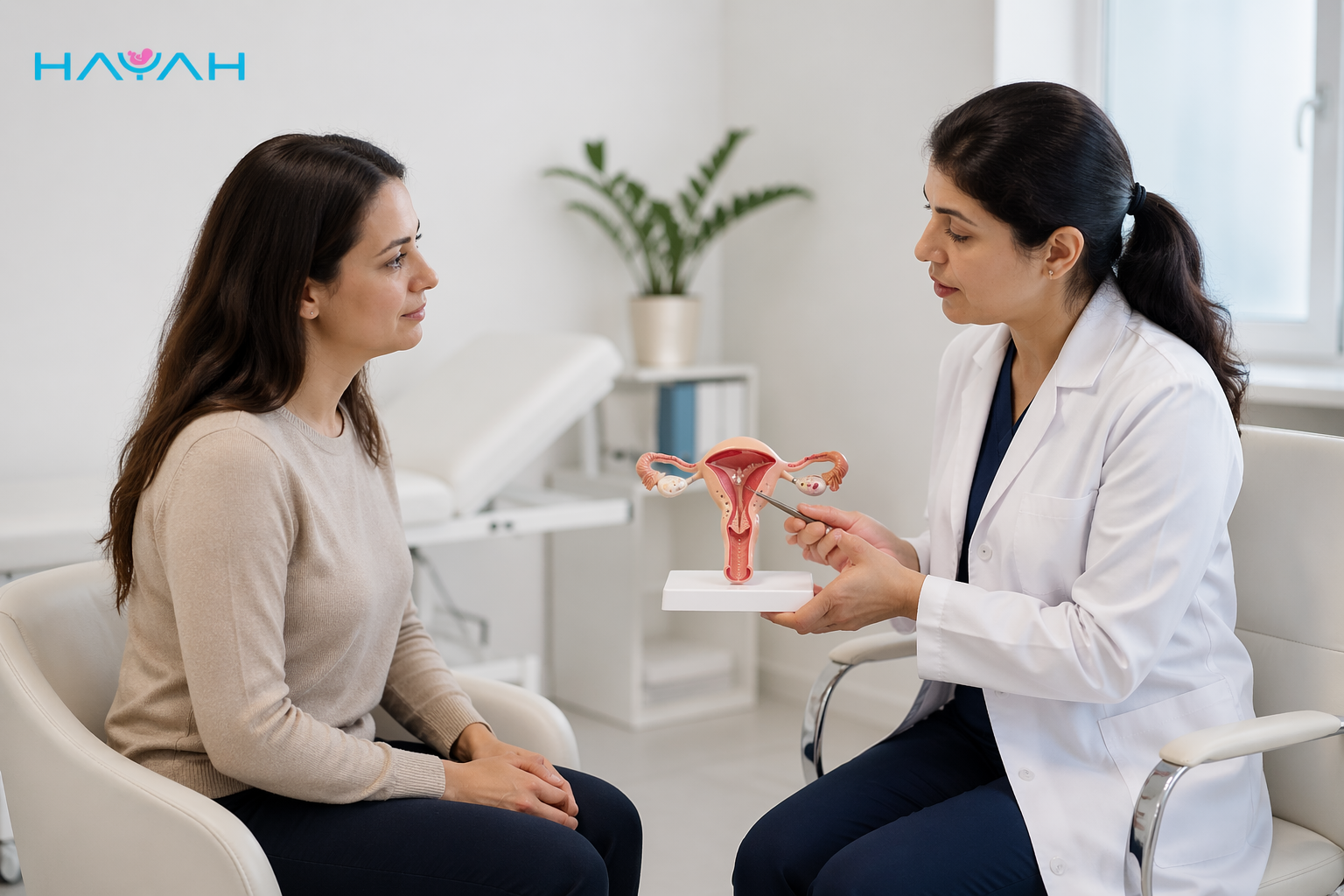

Pregnancy After the Age of Forty

Pregnancy After the Age of Forty

As a woman’s age increases, fertility decreases and the risks and problems during pregnancy increase, but pregnancy after forty is not impossible or prohibited with proper and regular follow-up.

Pregnancy After the Age of Forty

Content from the article

Section 01

As a woman’s age increases, her reproductive ability decreases, and the risks and problems during pregnancy increase, such as chromosomal abnormalities in the fetus, repeated miscarriages, high blood pressure, preeclampsia, diabetes, and others.

However, pregnancy during this period is not impossible or prohibited if there is good and regular pregnancy follow-up, in order to avoid the development of problems and achieve a healthy and safe pregnancy.

Related

More articles you may want to read

What Is Artificial Insemination (IUI)? A Complete Guide
IUI Guide

What Is Artificial Insemination (IUI)? A Complete Guide

Discover everything you need to know about artificial insemination (IUI), including how it works, success rates, benefits, and when it’s recommended for couples facing fertility challenges.

Read More
Modern Fertility Techniques: The Difference Between IVF and ICSI
Modern Fertility Techniques

Modern Fertility Techniques: The Difference Between IVF and ICSI

Read More